
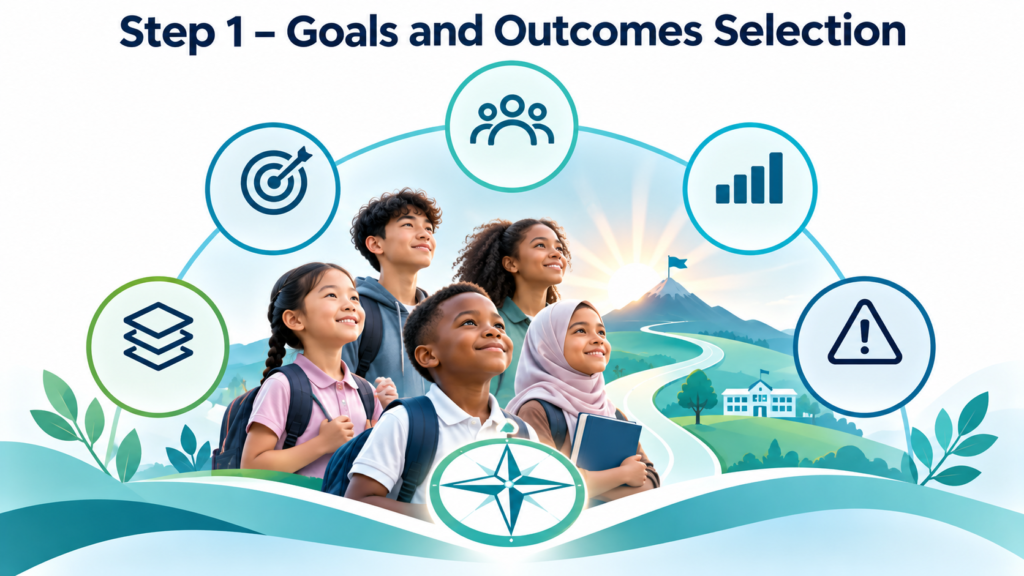
Defining the difference we want to make

The starting point is to be clear about what we want to achieve and the difference our work should make to children, young people and the communities we serve.

We need to distinguish between what we do (activities and outputs) and the outcomes we want to achieve (the changes that result).

Our intended outcomes should reflect our central purpose: expanding access to quality education and developing the knowledge, skills and capabilities that enable every child to fulfil their potential, regardless of their circumstances.

We use the Five Dimensions of Impact, developed through the Impact Management Project and now maintained by Impact Frontiers, to help us think systematically about the impact we intend to create.

The five dimensions guide our assessment:

1. WHAT – What outcomes are we seeking?

What changes do we want to achieve? These may include improved access to quality education, improved learning, increased knowledge and skills, and the development of individual capabilities.

2. WHO – Who experiences the outcomes?

Who are the intended beneficiaries? What are their circumstances, needs and existing barriers to accessing quality education? We should pay particular attention to children and communities who are underserved or disadvantaged.

3. HOW MUCH – How significant are the outcomes?

How many people experience the change? How substantial is the change, and how long does it last? This considers the scale, depth and duration of outcomes.

4. CONTRIBUTION – What difference does our work make?

To what extent do our programmes, projects and partnerships contribute to the outcomes achieved? Would the same results have occurred without our intervention? We need to understand the contribution made by DevelopTalent and the wider ecosystem.

5. RISK – What could affect the impact we intend to achieve?

What could prevent the expected outcomes from being achieved, reduce their significance or result in unintended consequences? This includes risks relating to access, quality, delivery capacity, partnerships and sustainability.

The output of Step 1

A clearly defined set of intended outcomes, identifying who should benefit, the nature and significance of the expected change, the contribution we intend to make and the risks that could affect achievement.

Step 2 – Metrics Definition

Establishing how we will measure success

Once we understand the outcomes we want to achieve, we need to determine how we will measure progress and assess whether those outcomes are being realised.

This involves translating our intended outcomes into practical indicators, establishing a starting point and setting targets against which performance can be assessed.

The following elements form the basis of our initial measurement framework.

1. Outcome indicators

Indicators provide evidence of whether the intended changes are taking place. They should measure outcomes rather than simply count activities.

Examples could include:

  • The proportion of learners achieving a defined level of literacy or numeracy.

  • Changes in learner assessment results over time.

  • The number and proportion of eligible learners accessing a programme.

  • The proportion of learners demonstrating specified knowledge or skills.

The precise indicators will depend on the objectives and design of each programme or project.

2. Baselines

A baseline establishes the starting position against which progress can be measured.

Depending on the intended outcome, this could include existing levels of learner achievement, access to education, knowledge, skills or other relevant conditions.

Where possible, baseline information should be collected before an intervention begins. Existing reliable information may also be used where appropriate.

3. Targets

Targets describe the level of improvement or achievement we intend to reach within a defined period.

They should be:

  • Linked directly to the intended outcomes.

  • Informed by available baseline information and evidence.

  • Realistic in relation to resources and delivery capacity.

  • Sufficiently ambitious to drive meaningful improvement.

  • Defined within an appropriate timeframe.

Targets should be distinguished from minimum standards or thresholds that indicate whether an outcome represents an acceptable or meaningful level of achievement.

4. Measurement methods and evidence

We need to identify how the information required to measure each indicator will be obtained.

Potential methods include:

  • Learner assessments and tests.

  • Surveys and questionnaires.

  • Interviews and focus groups.

  • Programme and project records.

  • Feedback from learners, educators and delivery partners.

  • Independent assessment or verification where appropriate.

The method selected should be appropriate to the outcome being measured and proportionate to the scale and resources of the activity.

5. Measurement frequency

We need to establish when and how often information will be collected.

This may include:

  • Initial baseline measurement before implementation.

  • Routine monitoring during delivery.

  • Periodic assessment of progress.

  • End-of-programme or project evaluation.

  • Follow-up measurement to assess whether outcomes are sustained.

6. Stakeholders and information responsibilities

We must identify the people and organisations who can provide, verify or use the information required.

These may include:

  • Children and young people participating in programmes.

  • Parents and caregivers.

  • Educators, trainers and service providers.

  • Programme and project managers.

  • Delivery partners and other ecosystem participants.

  • Funders and sponsors.

  • Independent evaluators or assessors.

The information collected should reflect relevant differences in beneficiaries’ circumstances and experiences. Personal information, particularly information relating to children, must be handled responsibly, with appropriate safeguards, privacy protections and consent.

The output of Step 2

A practical measurement framework for each programme or project, setting out:

  • Intended outcomes and indicators.

  • Baseline information.

  • Targets and relevant success criteria.

  • Measurement methods and evidence sources.

  • Measurement frequency.

  • Relevant stakeholders and responsibilities.